Monday, March 24, 2014

Have the Courage to Run

Let’s set the scene here.

A lone gritty hero stands atop a roof in the middle of a storming wind. The air is darkening as a swirling black cloud blurs the sun. Everyone else has frantically retreated, terrified at the oncoming horde of villains; everyone but the steely eyed hero. He stands alone and unafraid. With no regard for his safety, he unnervingly stares down the destruction-determined enemy. The fate of everyone rests upon his bold shoulders. In the face of the increasing pressure, there is only one thing that sustains the hero: His courage.


The story is the same almost everywhere. We are fascinated with the courage exemplified by protagonists in movies, comics and books. We love to see our heroes overcome extreme personal loss and then valiantly confront all-powerful villains. Even from a young age we can acknowledge and appreciate heroic courage. In an attempt to emulate that courage, children will devotedly adorn themselves with masks, helmets, and capes. As you age, your understanding of courage will deepen. Eventually, new heroes will inspire you to confront your daily villains disguised as illness, hardship, heartache, and injustice. I am thankful for inspired authors and creative minds that can portray courage well enough to inspire others to seek it.

Media portrayal of heroism is indicative of the value we place on courage. However, we typically only see one form of courage on television. This is the courage that provokes you to take a stand and face your fears. Every hero has this type of courage. But there is a second type of courage, and it is equally important. In addition to having the courage to stand, the greatest heroes also possess the courage to run.

Doesn't sound very glamorous, does it? In fact, it sounds like cowardice to most people. That is because we are bombarded with images of heroes with the courage to stand. In most minds, running is the antithesis of courage. Running is associated with everything that goes against conventional courage. Runners are cowards who wince, flinch, recoil, and tremble when faced with fear. You need to remember that every villain is different. While many times you will need the courage to stand, some of the most significant battles are won with a more subtle and less charismatic form of courage.

Due to the unglamorous nature of this topic, this is not an easy concept to illustrate. The bottom line is that too many people don’t understand what it means to have the courage to run. However, I think this story illustrates my point well. This is an excerpt from a discourse given during the October 2012 LDS General Conference:

Some years ago, John was accepted at a prestigious Japanese university. He would be part of the international student program with many other top students from around the world. Some enrolled with a hope to deepen their understanding of the culture and language, others viewed it as a stepping-stone to an eventual profession and employment in Japan, but all had left home to study in a foreign country.
Soon after John’s arrival, word of a party to be held on the rooftop of a private residence spread among the foreign student population. That evening, John and two friends made their way to the advertised address.
Following an elevator ride to the top floor of the building, John and his friends navigated the single narrow stairway leading to the rooftop and began mingling with the others. As the night wore on, the atmosphere changed. The noise, music volume, and alcohol amplified, as did John’s uneasiness. Then suddenly someone began organizing the students into a large circle with the intent of sharing marijuana cigarettes. John grimaced and quickly informed his two friends that it was time to leave. Almost in ridicule, one of them replied, “John, this is easy—we’ll just stand in the circle, and when it is our turn, we’ll just pass it along rather than smoke it. That way we won’t have to embarrass ourselves in front of everyone by leaving.” This sounded easy to John, but it did not sound right. He knew he had to announce his intention and act. In a moment he mustered his courage and told them that they could do as they wished, but he was leaving. One friend decided to stay and joined the circle; the other reluctantly followed John down the stairs to board the elevator. Much to their surprise, when the elevator doors opened, Japanese police officers poured out and hurried to ascend the stairs to the rooftop. John and his friend boarded the elevator and departed.
When the police appeared at the top of the stairs, the students quickly threw the illegal drugs off the roof so they wouldn't be caught. After securing the stairway, however, the officers lined up everyone on the roof and asked each student to extend both hands. The officers then walked down the line, carefully smelling each student’s thumbs and index fingers. All who had held the marijuana, whether they had smoked it or not, were presumed guilty, and there were huge consequences. Almost without exception, the students who had remained on the rooftop were expelled from their respective universities, and those convicted of a crime were likely deported from Japan. Dreams of an education, years of preparation, and the possibility of future employment in Japan were dashed in a moment.
Heroes who have the courage to stand are generally praised and applauded. In contrast, heroes with the courage to run face ridicule and embarrassment. Often, that ridicule will originate from the people you thought you could trust, leaving you with feelings of abandonment and solitude. That is why it is so difficult to develop the courage to run. On top of feeling alone, the very people that should be your allies will jeer, criticize, and mock you. Regardless of their reactions, keep going. Don’t look back. While you may feel immense loneliness for a time, your example will eventually inspire others to follow.

Obviously, there are moments where running is a totally inappropriate response when facing your villains. You will have to courageously stand up to bullies and stand up for victims from time to time. You cannot run from problems that demand your attention. However, do not underestimate the wisdom in running as well. It will often be difficult to know if is appropriate to run or stand. But as you practice courage and do what you know is right, it will become easier with each new villain.

 As you confront new villains and enter foreign battlefields, may I suggest a few scenarios where you can apply this advice?

1)      Run from culturally popular crusades that only appeal to emotion and not reason.

It seems that everyone must have a compelling cause to join. People are too often driven to seek a gaudy sense of purpose and desire to bring about change or rectify some wrong. I candidly acknowledge that there are some serious societal problems that plague humanity. Some of them must be addressed too. However, there are some battles that just aren't necessary and even distract from more serious problems that are ignored way too often.

2)      Run from friendships that do not respect your values.

There are millions of decent human beings that are worth befriending. Why waste your time on those that put you down or demonize you? I am not suggesting you befriend people who share all the same opinions, beliefs, and interests as you. On the contrary, you will need friends that can talk you out of some stupid things. However, choose friends that will build you up and hold you to high standards.

3)      Run from situations that will compromise your integrity and principles.

Our natural curiosity motivates us to do some pretty awesome things! A lot of creativity and innovation stem from that curiosity. However, it can lead us to some situations that cause us to push the moral boundaries we set for ourselves. Do not gamble with your integrity or principles for a brief moment of self-gratification or cursory indulgence. Lives can be permanently damaged in seconds, and the consequences can last a life time.

4)      Run from relationships that are abusive in any form.

While there are millions of wonderful people, there sadly exist hundreds of mean spirited and ill-behaved people as well. Don’t fool yourself into thinking that you can save or change somebody. If a person abuses you emotionally or physically, you owe that person nothing. Run from them. There are no courageous qualities for taking the abuse day after day. You deserve to be treated as a valuable human being.

5)      Run from degenerate media.

Technology offers some significant benefits that promise us the highest standards of living. However, it can do immeasurable damage to people who choose not to filter out degenerate and degrading material. Do not bog yourself down in the mire of pornographic filth. Don’t immerse yourself in pointless angry banter that attacks others and shuts down debate. There are a myriad of things to do with technology. You literally have more at your fingertips than any prior generation. Use it for worthwhile things.


I hope you develop the courage to confront your villains when required, and run from them when necessary. Have the courage to stand alone and run alone. Each challenge you face will be new and unique.  But regardless of the enemy or the situation, courage will enable you to overcome any challenge, win any battle, and survive every struggle.  

Monday, March 17, 2014

Capturing the Moment vs. Enjoying the Moment

Through no fault of my own, I have developed one of my dad’s favorite pastimes. It’s not easy for me to admit this since I have often ridiculed him for it. I finally now have to admit it, I am a people watcher. In particular, I tend to watch people during weddings, funerals, sporting events, or other memorable events. I’m not proud of it, and it most likely embarrasses Kara, but I am fascinated at how people behave during a memorable moment.

No matter what the event, I always see a handful of people that always have their phone or camera out to capture the special moment. They eagerly trail wherever the action is, emphatically snapping photos at one instant and vigorously recording video the next. The moment is all too important to ignore, therefore it must be documented religiously. While I do think it is great that people recognize the significance or importance of a moment, they often can rob themselves of a great experience. They choose the capture the moment over enjoying the moment.
What are you missing behind that 2 1/2 inch screen?

Moments are not made of just images or videos. A moment is generated by so many different things in combination with an image. In addition to seeing, what do you feel? What do you hear? What is happening outside the lens? What are you missing outside the narrow optics of your camera? What will you remember after unlocking your phone, selecting the right app, turning off the flash, zooming in, and focusing the lens? After taking all that time to capture the moment, did you leave enough time to experience it?

Please know that I am not an archaic anti-camera crusader. There is no doubt in my mind that documenting special experiences is a worthwhile endeavor. I have been the beneficiary of people who have documented important moments in my life. I would be disingenuous if I didn't admit to looking back at those photos or videos to remember the positive experiences of my lifetime. However, there is value in stepping back from the lens and fully experiencing the moment at hand without a digital filter.

Thankfully, it has never been so easy to capture a moment like it is now. At virtually any time, we can snap a picture, edit it, and send it out to as many people as we like. So you can argue that instead of reducing our ability to enjoy an experience, cameras have actually enhanced those experiences and allowed for us to share them with others. In response to that, I agree 100%! There are many appropriate times to document and share a moment with others, and I am grateful that my friends and family share their moments with me. However, don’t deny yourself of an uplifting experience for the sake of capturing it all on film.

Take a step back. See the bigger picture. Pay attention to your feelings and enjoy the moment altogether. No photo or image will ever create the feelings you would have otherwise experienced had you actually enjoyed the moment.

 By nature, moments are short and fleeting. They are instant, yet stirring. A single moment can have lasting effects on our lives. In fact, a single moment can be the catalyst for enduring change. I think that is why we have become obsessed with preserving moments through photos of videos. Moments mean so much to us.

For these reasons, I encourage you not to miss a moment. If you can capture it without diminishing its value, then by all means you should. Just remember… if you’re too busy trying to capture the moment, you might just miss it entirely.


Friday, March 14, 2014

Mad Dash

Springtime is here! Along with the warmer days and greener sights comes the promise of backyard barbecues and family fun. I contend there are few activities that combine food and fun like a Gulbranson family barbecue. I have been thinking about them constantly over the past few days! No doubt you can add food to any Gulbranson family occasion, and it is likely to become an instant classic. However, what separates a Gulbranson family barbecue from any other food extravaganza are the games played following the food.

Gulbranson backyards have seen many summer games; everything from bocce and football, to horseshoes and baseball. Yet there is one game that has defined Gulbranson barbecues for nearly a decade. It has remained relatively unknown to the outside world, but I feel a strong obligation to ensure it remains relevant to my posterity. Allow me to give you a rare glimpse into the legendary world of Mad Dash.

While Mad Dash is a game for everyone, it heavily favors the nimble and accurate (neither are traits most Gulbransons possess following a vigorous barbecue meal). In its most poetic form, it is the arena wherein you can witness the weak, the strong, and the food-induced comatose be hewed down by an endless barrage of 12-inch-plastic-frisbee majesty. To the victors go all the honors and accolades a backyard sport can afford, whilst the defeated leave only with grass-stains, welts, and injured pride. Taking the concepts of conventional dodge-ball, and elevating the fear and passion to new heights, Mad Dash is a spectacle you don’t want to miss out on.

The rules are fairly simple. You will likely draw many comparisons to dodge-ball. However, I can assure you that this game is a different monster in its own right. So for the first time ever, I have published the rules and regulations for the game of Mad Dash:

1. Equipment

1.1) The number of Frisbees used in the game often varies, but it is advisable to have 6 to 10 for a game. Standard models for Frisbees are based on President’s Choice ice cream lids and generic Frisbee models. Frisbees are not to exceed 12” in diameter.

Generic Mad Dash Frisbee Model
2. Court

2.1) All Mad Dash games must take place on a grass court, preferably allocated in a yard. Court must be large enough to allow at least 12 people to move comfortably around the lawn. Both sides are evenly divided by a center line.

3. Game Objective

3.1) Eliminate all opposing players by hitting them with Frisbees. Be the last team standing.

4. Rules of the Game

4.1) Prior to starting the game, all Frisbees are distributed evenly along the center line and both teams are required to wait at the back of their respective halves of the court. Upon commencing the game, players will rush towards the center to gain possession of the Frisbees. Upon gaining possession of a Frisbee, you can commence to throw opposing players out from anywhere on your side of the court.

**Strategic Note**: Younger nephews or relatives make excellent Frisbee fodder during the initial frenzy.

Uncle Mike is about to ring the ceremonial chime to start the game. Notice that Uncle Kaelen, Uncle Mike, and myself have strategically positioned ourselves right behind the Frisbee fodder line. Since it was Kara's first game, she also joined our proud Frisbee fodder line (she didn't know better).
4.2) To be considered “out” you must be cleanly hit by a Frisbee, or have an opposing player catch your Frisbee. Head shots are considered viable. Upon being out, you must sit on your team’s bench in order from which you were out. Frisbees caught result in the Frisbee-thrower going out and the Frisbee-catcher reinstating a teammate from the out-bench.  If a Frisbee hits an opposing player but gets caught by one of the hit player's teammates, the thrower is out, a player gets reinstated, and the player who got hit stays in. Consequently, if a Frisbee hits multiple players and the Frisbee hits the ground without being caught, all hit players are considered out.

**Strategic Note**: Avoid excessive trash talking or inciting opposing players while close to the center line. Karma has not been kind to the faces of flamboyant provokers and pesky instagators.


4.3) At any time during the game, a player may cross the center line into the opposing team’s territory to retrieve an unclaimed Frisbee. Upon doing so, the invading player must shout “Mad Dash!” An invading player may not throw or catch an opposing players Frisbee. Any contact with an opposing players Frisbee while on a Mad Dash will result in the invading player being sent to the out-bench.

**Strategic Note**: Younger relatives also make excellent shields if they are light enough to carry when you feel inclined to perform a Mad Dash.

4.4) When a team is down to a single player, that player has two minutes to finish off the rest of the opposing team, or reinstate a teammate on the out bench. Failure to accomplish at least one of these tasks within the aforementioned time limit will result in the implementation of the Open Season rule. Once the time is up, Open Season is declared by the opposing team’s out-bench. This declaration renders all restrictions by the centerline nonexistent, effectively hastening the end of the game.

**Strategic Note**: Seriously, do not underestimate the usefulness of the younger kids. They can become your most effective tools for victory!

I cannot emphasize enough how fun this is!! With the right group of guys (and kids I might add), this became an instant family classic that endures in the minds of Uncles, nephews, and brothers to this day. I look forward to the day you join the ranks of the legendary Dashers in our family. Until that time, keep your head up, feet moving, and don’t hold grudges against your uncles if they shamelessly use your “unique” talents to gain an advantage on the field. Remember… it’s all for the team.

Thursday, February 27, 2014

Long-Suffering

Rub some dirt on it!

Shake it off!

Hold your knee!

Suck it up!

Take it like a man!

Walk it off!

How many times have you heard these words, or at least some variation of them? For your sake, I hope you hear them often. This is no news flash: life is tough. Sometimes it is ridiculously tough. At the end of every man’s rope, there is a new rock bottom previously undiscovered. At the depths of every rock bottom, you may find that you have reached all new lows. Once you have fallen to record lows, you may find yourself far enough down to be in the dumps. This helpless tumble into heartache and despair can weigh you down until you feel you have reached even hell itself.

When we are in the middle of our ill-fated free-falls, probably the last thing we want is for someone to tell us to “shake it off!” “Get your head in the game!” or “Get over it!” Often it is the thing we need to hear most.

Long-suffering is a noble characteristic that few people know of, and even fewer people possess it. The name itself can be a little misleading. A long-suffering person is not an unlucky, injury-prone, miserable, or cursed being. A long-suffering person does not endure misfortune for extended periods of time.  A long-suffering person does not play a victim in an endless tragedy of loss, trial, or calamity. Long-suffering goes far beyond these shallow and inaccurate representations.

Long-suffering is the ability to patiently overcome lasting hardship and adversity. This is a quality that I feel separates the perpetually happy from the incessantly sad. It is a quality that I hope all my children will develop. It is a characteristic that I work on constantly. Sometimes I am pretty good at it. Other times it escapes me completely. But the difference it makes in my life has been intensely obvious. I would like to share with you a few thoughts on what makes this quality so unique and beneficial.

Long-suffering is the ability to PATIENTLY overcome lasting hardship and adversity.

Patience is a huge part of what it means to be long-suffering. It is necessary because the period during which you will suffer is very long. I would argue that some people suffer for their whole life to some degree. Some people are born with severe illnesses and disfigured bodies that will never be made right in this life. In spite of this, they do more to inspire happiness and courage that any able-bodied athlete or celebrity. These people candidly challenge the misconception that suffering is the antithesis of happiness. They prove that one can suffer and be happy simultaneously. In fact, I would argue that one cannot fully understand what it is to be happy without mortal dose of suffering. So when you suffer, be hopeful. Be grateful. Be patient.

Long-suffering is the ability to patiently OVERCOME lasting hardship and adversity.

Long-suffering is not a passive human characteristic. It is not enough to simply endure and outlast the problems that life will inevitably throw at us. Rather, we must overcome them.

I grew up with a group of fantastic friends. I have one friend in particular that I have always admired. We spent many years playing sports together and having some great experiences during high-school. A few years ago, his younger sister disappeared under mysterious circumstances. Her disappearance shocked the community and sparked a massive search to find her. Thus far, the efforts to find her have yielded little results and she remains missing. It has been a very harrowing and difficult experience for my friend and his family. Yet despite the heartache and suffering they have experienced, they choose to overcome and not just to endure. Rather than seclude themselves to a life of angst and silence, they continue to search. They continue to raise awareness. They continue to inspire hundreds of people with their efforts. They are not enduring their tragedy. They are overcoming it.

When seen from this perspective, long-suffering is a call to action. It is a call to pick yourself up and dust yourself off. There is work to do. There are people who need you. There are changes that need to be made. When you suffer, don’t just endure your trials. Don’t just outlast your trials. Overcome them.

Long-suffering is the ability to patiently overcome LASTING hardship and adversity.

This is probably the toughest thing to acknowledge when we talk about long-suffering. Sometimes the suffering is indeed, very long. Life itself is a long series of punches. We are presented with hardship after hardship. At times, it seems like they never may end. Maybe they won’t. Understanding what role hardship and grief play in our lives is important. There is no success without hardship. There is no happiness without grief.


There is not a single moment, but many defining moments where we must make a choice. We can choose to settle for being miserable, give in to our personal flaws, and not reach our true potential. Or we can choose to be long-suffering by overcoming our hardships today while believing someday our lives will be better. I would prefer to choose the later.

Human beings have an incredible ability to make life miserable. We are so good at finding trouble, and even better at letting trouble find us. However, what is more incredible is our ability to turn our misery into victory. We have turned bloodshed and tyranny into freedom and prosperity. We have turned hatred and ignorance into peace and understanding. It will be hard, but remember that within you exists a transcendent ability to turn your rock bottom into a solid foundation.

Tuesday, January 28, 2014

Choices

To what degree does choice influence our lives? I think most of us would agree that choice greatly impacts our personal lives. When typically we talk about choices, we talk about the big stuff. Which school do I choose? Which girl should I choose to date? What career path do I take? Vote Democrat or Republican? Sausage or bacon? I think you get the point.

 I think we sometimes do ourselves a disservice when we think of choice in that sense. Don’t get me wrong, these are essential choices that we must make at some time. I don’t want to diminish their importance. However, choices are so much bigger than choosing the big stuff. In fact, I feel that some of the biggest decisions are made daily, even hourly. Those are the types of decisions that have significant consequences, both positive and negative, that impact us far beyond the moment we make that them.

One of the biggest choices of my life I have to consciously make every single day. And I think that it is a choice that not many people realize we have. You see, I firmly believe that we choose to be happy. Abraham Lincoln pretty much summarized my sentiment when he said that, “most folks are as happy as they make up their minds to be.” I have found that to be entirely true in my own life.

I think the best example of choosing happiness is revealed in our every day interactions with people. People can be downright mean and malevolent. We all know a few of our own acquaintances that have an innate talent to tear you down. The power people have over others is impressive and sometimes scary. Yet, despite all that “power”, they don’t have any power over how you react. Remember that no one can make you angry. YOU choose to be angry. However, once you make that choice to stay calm, collected, and levelheaded, you have all the power. In contrast, losing control of your emotions and becoming agitated ultimately gives away that power. If you don’t believe me, I invite you to read “Man’s Search For Meaning” by Viktor Frankl.

Many will teach you what their definition of choice is. Be careful about what the world teaches you about choice. No doubt you will hear a great deal of people talk about it. Usually the conversation is saturated with comments like “my life, my choice” or “this does not impact anyone else”. People have been tricked into believing in something known as free choice. Let me tell you now, there is no such thing as free choice. It simply does not exist.

How can we be free to choose if there is no such thing as free choice? Seems like a pretty bold contradiction. Of course we are free to make choices, but no choice is free. Every choice comes at a cost; or in other words, a consequence. Today there is so much focus on choice. We all feel entitled to make our own choices, and indeed we are. Yet with every choice comes a consequence. Agency also breeds accountability. Freedom requires responsibility. Frankl articulated this sentiment very well when he said:

Freedom, however, is not the last word. Freedom is only part of the story and half of the truth. Freedom is but the negative aspect of the whole phenomenon whose positive aspect is responsibleness. In fact, freedom is in danger of degenerating into mere arbitrariness unless it is lived in terms of responsibleness. That is why I recommend that the Statue of Liberty on the East Coast be supplemented by a Statue or Responsibility on the West Coast.
Unfortunately, some of the consequences that are the most serious and damaging are the ones that are least explored. Rather, they are suppressed or shouted down in the name of --- you can't make this up --- choice. It is one of modern life’s greatest ironies. This tragic process leaves behind a lot of victims who are left with little or no choice at all. 

So during your life, don't expect the world to always respect your choices. As long as your decisions are based on the the simple fact that there are consequences, then many people in the world will simply not understand them. Choice may be the most single most empowering tool we have. Don’t be quick to give away that power to people who have no interest in your well being or happiness. Treasure that gift, and use it to uplift yourself and others. Be proud of the good choices that you make, then work to fix the bad choices that you make.


Wednesday, January 22, 2014

Views on Sportsmanship

Imagine you are in a confined space with fixed boundaries. Suddenly, someone adds a set of rules, a rule enforcer, and every known feeling that fits within the range of human emotion. Where are you?

You are likely in one of two places: at home living with your parents, or at a sporting event.

Fortunately for you, the rule enforcer is always on your side when you’re at home. From personal experience, I can’t guarantee that will be the same in any of your competitions, games, or events. In fact, I can guarantee that they won’t be on your side from time to time. There is nothing predictable when it comes to sports. Perhaps that is a big reason why sports are so special. David can beat Goliath. The small guy can make the team. The Chiefs can win a Super bowl!! Any outcome is possible. This one characteristic of sports has caused humans to experience everything from complete joy and euphoria to utter disappointment and rage. You do not have complete control over the outcome of a game, but you do have complete control over yourself.

It seems sportsmanship is a vanishing value. You don’t need to look too far to see the evidence. Just this year I have seen professional athletes throw temper tantrums, punch opponents, and verbally belittle the competition. Fans and aspiring athletes then choose to emulate that behavior. They post nasty comments about a friend’s team off the field, and they throw dirt in your eye when they are on it. If you haven’t already experienced this already, you will eventually.

If you have any level of competitiveness close to mine, this could be a challenge for you. For the most part, I have done well to keep my emotions at an appropriate level. I have let my emotions get the best of me on a couple occasions. I regret every instance when it happened. For those brief moments, I put myself and my ego before the team, and I let my friends down. However, I always wanted to be a team player and earn the respect of my coaches, team mates, and community. That always seemed more important than a personal vendetta.

You need to understand that passion and intensity are good things. The very best athletes have both. It’s ok to feel a little angry or get a little frustrated. Those emotions can help push you to be a tougher competitor. Just remember to use those emotions to make yourself a better player, and make the game a better experience. Do not let those emotions ruin the game for you, your teammates, and the spectators.


Here are a few things that I have learned about sportsmanship and sports:


  • Be a graceful loser: Take responsibility for the loss. Don’t place blame elsewhere. Yes, the ref could have blown a call, a team mate might have missed an assignment, or your coach could have made a mistake. Although it may not seem that way, not every game is determined by a single event. Every bad call is usually preceded by numerous mistakes, favorable calls, and lucky bounces that went your way. In most cases, the other team won fair and square with no foul play.
  • Be a humble winner: I grew up hearing the phrase, “act like you been there”. There is no need to belittle a team or player after beating them. You need to remember what you felt like after every loss you experienced. As long as you keep your composure following a win or successful season, the odds are better that you will repeat your success over and over again.
  • Treat opponents with respect: You should know that you need your opponent. After all, there would not be a game without them.
  • Always take the high road: This can be tough. You will probably run into a horrible player that’ll do everything to get under your skin. Personally, players have bitten me, thrown dirt in my eyes, stomped me, called me nasty names, or elbowed me. I learned to smile when they did those things. They only stoop that low because YOU have already got under their skin and they don’t know how to respond.
  •  Don’t be mouthy: Words have consequences. Poorly chosen words have the worst kind of consequences. There is nothing more foolish looking than an athlete who says something wildly outrageous and has to eat their words later. In order to save face, they usually end up saying more garbage hoping to mitigate any damage they did in previous comments, only to fall further from grace. Sadly, people no longer remember them for their talent or awards. They are only remembered as a classless and desperate goof.
  • Don’t excuse poor sportsmanship: This happens a lot. We are quick to call out an opponent for being a bad sport. Yet, we turn our gaze when it is one of our teammates or favorite players. Poor sportsmanship is wrong, no matter who it is. Don’t rush to defend a guy on your favorite team who acts like a buffoon. Just because you oppose his behavior, does not mean you betray your team.
  • Try your hardest: People generally are involved in sports to compete and improve. It is frustrating meeting somebody who just doesn't care about putting forth their best effort. Other participants have put a lot of time and effort into preparing. Be respectful of that and go out there and compete. If you aren’t going to put in the time or give it your best shot, don’t bother showing up.
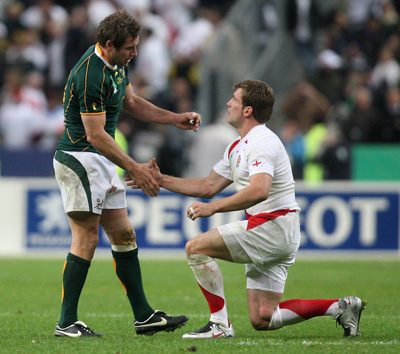
In spite of the lack of sportsmanship on the field, court, or diamond, there still are a amazing group of athletes who understand what a sport is all about. If you would like to see a prime example of what it means to be a good sport, I invite you to check out this story.

Valuing good sportsmanship is in your best interest. Being a good sport will always lead to better success in sports, or any other part of life. One big reason we remember some of the greatest athletes is not only because of their amazing talent, but because of their classiness on and off the field. On the flip side, we usually remember the arrogant stars for their stupid antics rather than for their talent.

“In the end, it’s extra effort that separates a winner from second place. But winning takes a lot more than that too. It starts with complete command of the fundamentals. Then it takes desire, determination, discipline, and self-sacrifice. And finally, it takes a great deal of love, fairness, and respect for your fellow man. Put all these together, and even if you don’t win, how can you lose?

                                                                                                                                
-Jesse Owens-

Here is a funny video about the many types of players you will likely meet. Enjoy! And remember... Stay classy!


Friday, January 17, 2014

A Not So Ancient History

This is Mel and Kathi Gulbranson…


You know them as Grandma and Grandpa Gulbranson.

Together, these two have taught me more than anyone else. I can confidently say that most of what I am today I owe to these two. Therefore, if you want to understand more about me and more about yourself, you need to know about their story.

Grandpa Gulbranson has lived one of the most unique lives out of anyone I know.  After living a good portion of his childhood in Minnesota, his family was compelled to move to Utah when his father became seriously ill. No longer employed, Orin Gulbranson (your great grandpa) gathered their meager belongings and loaded them into a horse-drawn wagon. You read that correctly… a wagon. When Orin suggested that the horses had to be sold, the kids begged him to keep them. He joked that they would have to ride the horses to Utah instead. The family called his bluff and they set off on the nearly 1,300 mile trip. The experience resulted in many miraculous and amazing stories that have forever bonded his family together.


After some time in Utah, the family again had to move and choose to relocate to a tiny Canadian town. They originally hoped to be involved in farming, but there were more opportunities at the local lumber mill. From this point, your Grandpa became a successful entrepreneur and started a family logging company that has grown impressively in spite of his limited education. To this day, Grandpa Gulbranson keeps working. It seems sometimes that he will never fully retire. He just enjoys being busy and won’t slow down. At times, this has driven my siblings and me crazy because he always had us working on something with him. Yet, we are thankful for him teaching us to work hard.

These days you will find him doing all sorts of stuff. He has many hobbies including hunting, trapping, farming, fishing, and working. I am not kidding when I say work is his hobby. There is no real way to explain his drive to work other than he finds it fun. I hope you get to work for him someday. He has a knack for getting on your case about ruining a piece of expensive farm equipment, then later that same day destroying equipment of equal or more value. His favorite tool of destruction: Fire! Few things make me smile more than watching him try to fix a piece of farm equipment. 

He is crazy about his grandchildren. It is not uncommon to see a mass of kids surround him at church waiting to get a mint from him. He will eat strange stuff some of us will never dream of touching. Pickled pig’s feet are just one of his favorite snacks. He is a devout Rook player; almost too devout. To this day I hate everything to do with Rook because of it. He likes most games, except the ones he is not good at. Overall, he is an enjoyable person to be around and a good honest man.

One of them has a reputation for being stubborn... the other has perfected the art itself

He also has a thing for hats
All that's missing is the Duck Dynasty beard

Grandma Gulbranson has an equally interesting history. She was born in the state of Wyoming, but due to her father’s career she moved all over the United States and parts of Europe. Her family moved to Canada too and there she met Grandpa Gulbranson. They got married and started their life off in very humble circumstances. Together with Grandpa they lived in a small wood cabin with very few possessions. They worked tirelessly together doing butcher work to make ends meat (hehe). Little by little they worked towards improving their lot in life. She selflessly put aside many of her interests and desires in order to help out her growing family, which concluded with a total of nine kids. She has been a great example of sacrifice in my life.

Grandma Gulbranson has very different interests than Grandpa. First and foremost, Grandma loves American history. Her office is loaded with books about the American Revolution, the Civil War, Abraham Lincoln, and many other historical topics. Along with Grandpa, she has visited Israel, Egypt, Guatemala, and many of the Eastern United States. As a result, she is a very knowledgeable and intelligent woman. My own interest in history and politics is a result of her passion. I love to hear what she shares about history.

She adores her grandchildren! She maintains a tradition of taking them out to movies and buying first-day-of-school shirts. She is always sympathetic towards them, which makes us sibling slightly jealous since we rarely received such sympathy in our youth. In fact, most of my friends that know her always would say, “your mom is so nice!” or “Aunt Kathi is the best!”… (That was a simpler time when all you needed to win over the hearts of teenagers was a dozen fresh glazed donuts). My teenage eyes didn’t notice at the time, but she is indeed one of the nicest people you could meet.

Talented
Beautiful
She has it all!

I am sure we drive her crazy from time to time. We are a sarcastic and ridiculing bunch of brothers and sisters. Yet, she taught us the importance of being respectful, clean, and well mannered. She did a good job of it for the most part. At least publicly we are considered normal human beings. Anyone who can accomplish that and not check themselves into a mental institution deserves great respect.

I have the utmost respect for my parents. I am humbled by the lessons they have taught me as I have grown. One of the biggest lessons I learnt from them was not given to me with a routine lecture or a creative discipline. What I have learned resulted from years of silent observation. Whether they realized it or not, they taught me more through example than with words. By observing them I have learned this one simple, yet powerful truth:
There is no trial too great, nor struggle too hard that can prevent you from accomplishing big things.


You see, Grandma and Grandpa have had a plethora of opportunities to give in and let bad fortune or harrowing trials stop them. If you were to ask them, they could tell you dozens of stories about when it would have been easiest to settle for mediocrity, or let disappointment interfere with their goals. It would have been so easy to place blame and find fault elsewhere. However, they never balked at an opportunity to put that all aside and do what they could for the sake of our family. I believe this shared trait has made them as successful as they are.

I am grateful for wonderful parents who pushed me in the right direction. They are now some of my closest friends and I am happy they did so much for our family. I hope you take the time to get to know them. You can learn a lot from their experiences. I know that I already have, and I continue to draw strength from their examples as well.